The Macrobiotic Path to Total Health: A Complete Guide to Naturally Preventing and Relieving More Than 200 Chronic Conditions and Disorders Review

The Macrobiotic Path to Total Health: A Complete Guide to Naturally Preventing and Relieving More Than 200 Chronic Conditions and Disorders
Average Reviews:

(More customer reviews)
To those who understand its significance, this is a profound and revelatory book.

Like all living things, food has energy in it. Macrobiotics is eating according to the energy in food, which allows us unprecedented control over our health.
The "vague" quality the previous reviewer objects to is inherent in Chinese medicine and is in fact one of its greatest strengths, permitting a view of health and disease based on concepts rather than data. (And in fact, the book isn't vague at all--this is just a reflection of her unfamiliarity with the ideas.)
Nor do the authors "mention all types of alternative therapies." For each category of illness, they outline the conventional medical treatment, provide references to medical studies (for those who feel the need for this sort of thing), and then discuss the macrobiotic approach.
The same goes for the comment that "a more specific macrobiotic way of eating would have been nice." This is a highly specific book on how to use macrobiotics to treat over 200 health problems without recourse to the toxic, invasive, and expensive techniques of conventional medicine. Nevertheless, the authors devote over 100 pages to macrobiotic philosophy and practice and another 20 or so to recipes. Anyone who feels the need for more information should investigate the numerous books on the subject by Michio Kushi and others.
As for repetitiveness, this is inevitable in a book intended even for those with no exposure to macrobiotics, because each condition requires modifications of the diet. Rather than giving the basic diet in one place and requiring readers to flip back and forth through the book and put it all together themselves, they've quite reasonably done so for us.
As far as wanting you to "buy more from their website," this 500-page book has a two-page resource list at the end, presumably for those without convenient access to natural-food stores. If that constitutes a shameless hard-sell, I'd like to see more of that attitude in the marketplace.
I've been macrobiotic for over 20 years and find this an extraordinary book, like all Michio Kushi's works. I buy copies and give them away to people I know who are sick, because my two decades of experience with this diet have convinced me that vegetarianism is essential to good health--and if you're going to be a vegetarian, I can't imagine doing it any other way.

Click Here to see more reviews about: The Macrobiotic Path to Total Health: A Complete Guide to Naturally Preventing and Relieving More Than 200 Chronic Conditions and Disorders

"Food is the chief of all things, the universal medicine. . . . Food transmutes directly into body, mind, and spirit . . . creates our day-to-day health and happiness."—from The Macrobiotic Path to Total HealthEven in medical schools, alternative medicine is blossoming. Two thirds of them now offer courses in complementary healing practices, including nutrition. At the heart of this revolution is macrobiotics, a simple, elegant, and delicious way of eating whose health benefits are being confirmed at an impressive rate by researchers around the world.Macrobiotics is based on the laws of yin and yang—the complementary energies that flow throughout the universe and quicken every cell of our bodies and every morsel of the food we eat. Michio Kushi and Alex Jack, distinguished educators of the macrobiotic way, believe that almost every human ailment from the common cold to cancer can be helped, and often cured, by balancing the flow of energy (the ki) inside us. The most effective way to do this is to eat the right foods, according to our individual day-to-day needs. Now in this marvelous guide, they give us the basics of macrobiotic eating and living, and explain how to use this powerful source of healing to become healthier and happier, to prevent or relieve more than two hundred ailments, conditions, or disorders—both physical and psychological. This encyclopedic compendium of macrobiotic fundamentals, remedies, menus, and recipes takes into account the newest thinking and evolving practices within the macrobiotic community. The authors integrate all the information into a remarkable A to Z guide to macrobiotic healing—from AIDS, allergies, and arthritis, to cancer, diabetes, and heart disease. They also clearly explain what we need to know to start eating a true macrobiotic diet that will provide us with a complete balance of energy and nutrients. Living as we all do in environmental and climactic circumstances that are largely outside our personal control, it is vital that we follow a healthy lifestyle, including a flexible diet that we can adjust to meet our own individual needs. The Macrobiotic Path to Total Health gives us precisely the tools and the understanding we need to achieve this goal. Use it to build a strong, active body and a cheerful, resourceful mind.From the Hardcover edition.

Buy NowGet 32% OFF

Click here for more information about The Macrobiotic Path to Total Health: A Complete Guide to Naturally Preventing and Relieving More Than 200 Chronic Conditions and Disorders

Read More...

The Juice Lady's Living Foods Revolution: Eat your way to health, detoxification, and weight loss with delicious juices and raw Review

The Juice Lady's Living Foods Revolution: Eat your way to health, detoxification, and weight loss with delicious juices and raw
Average Reviews:

(More customer reviews)
Just learning about juicing. This book has been very helpful to teach me how to make good choices in produce. I could do without the religious overtones, but the author has made an amazing recovery back to good health through juicing which I respect.

Click Here to see more reviews about: The Juice Lady's Living Foods Revolution: Eat your way to health, detoxification, and weight loss with delicious juices and raw


Buy NowGet 32% OFF

Click here for more information about The Juice Lady's Living Foods Revolution: Eat your way to health, detoxification, and weight loss with delicious juices and raw

Read More...

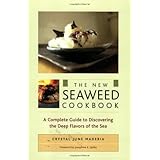
The New Seaweed Cookbook: A Complete Guide to Discovering the Deep Flavors of the Sea Review

The New Seaweed Cookbook: A Complete Guide to Discovering the Deep Flavors of the Sea
Average Reviews:

(More customer reviews)
I have been using these recipes for the past few months and I absolutely loves them. I am eating ingredients I never imagined I would. All of the recipes are well though out, balanced, and sensational for the taste buds!
I was vacationing in Vermont earlier this month and visited the author's restaurant in Montpelier, Kismet Cafe. It was the cutest place I have ever dined in and the food was sensational. I think all of their food is organic and locally grown. I have to admit that I ate there more than once and each meal left me full (without being overly stuffed) and held me over until much later in the day. If you are ever in the area, you have to check it out!

Click Here to see more reviews about: The New Seaweed Cookbook: A Complete Guide to Discovering the Deep Flavors of the Sea

Recent trends suggest a wide range of consumer concerns in food choice and consumption. Increasingly, buyers prefer organic and locally produced ingredients; good taste; high nutritional and medicinal value; and low-allergen factors. The humble seaweed, nature's richest source of iodine and loaded with minerals, addresses all these concerns.In this combination cookbook and food guide, Crystal June Madeira explains the properties of each variety of seaweed—kombu, nori, arame, wakame, and dulse–and provides simple instructions for its preparation in delicious recipes such as Lime Cumin Aioli, Sautéed Wakame and Green Beans, Summer Chicken Soup with Sea Palm, and Baked Figs with Honey Lemon Thyme Sorbet. Seaweed's healing properties in detoxifying the body, alleviating cramps, and lowering blood pressure, have been well documented. That factor, along with the absence of gluten and other allergy triggers, make these recipes ideal for anyone seeking improved health, as well as those who enjoy sea vegetables in Japanese cuisine and want to learn how they can eat them more often. Maderia includes current information on how to purchase local foods, and a directory of seaweed harvesters worldwide.

Buy NowGet 29% OFF

Click here for more information about The New Seaweed Cookbook: A Complete Guide to Discovering the Deep Flavors of the Sea

Read More...

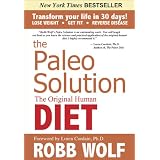
The Paleo Solution: The Original Human Diet Review

The Paleo Solution: The Original Human Diet
Average Reviews:

(More customer reviews)
Let me begin by saying that I have always been a healthy person--or at least that is what I thought. Since I was fourteen, I went to the gym almost every day and ate foods that I thought were good for me. Around the age of thirty I got super busy. Although I still worked out and ate foods that I had been told were healthy, I didn't sleep as much, stressed a whole lot more, and things began to go down hill. I developed a fairly good-sized tire around my midsection. The color of my skin was a little off. And, most importantly, I no longer felt super healthy. I tried everything I could thing of, which basically boiled down to eating less of the foods I had been told were healthy. I ate a ton of lean meats, and I combined them with a ton of carbs in the form of rice. I cut out every ounce of fat I possible could. And guess what? I started to feel (and look) even worse. In an attempt to correct the situation, I began working out even harder. Although I got stronger and gained more muscle, I still had that tire of fat around the midsection and had very little energy on most days. Was I just getting old? Were the good old days of being fit and healthy gone for good?
A friend of mine had been following Robb's teachings for some time, and he turned me on to the diet. As with most people who learned "nutrition" in college, I was highly resistant. I mean, why would they be teaching us the wrong nutrition in college. The professors seemed pretty smart, and I doubted that they had the goal of trying to kill me. But I was failing with the traditional way of thought, and so I decided it to give the thirty days. My friend told me that Robb preached the "give me 30 days" philosophy, and so that is what I decided to give this new and strange diet, which I still doubted would ever work. Well, thirty days later I had dropped TWENTY SIX POUNDS. Am I joking about that number--absolutely not. A part of it had to do with the fact that I was working out a whole lot more--but the only reason I could work out more is because I was feeling so GOOD. How good? Well, to be quite honest, I was feeling like I did back when I was eighteen (well, maybe not eighteen, but twenty one for sure.)
Now a year and a half later, I feel better than ever. That twenty six pounds of weight loss not only did not come back on, but it turned into thirty pounds of weight less (and yes, I needed to drop thirty pounds.) Just like Wolf's slogan, I LOOK, FEEL, AND PERFORM better than I ever thought imaginable. For someone who has always prided himself on being fit, healthy, and happy, I can honestly say I owe Wolf the world. His teachings have convinced me that getting older does not mean getting fatter, sicker, and less happy. Will you be eighteen for the rest of your life if you take Wolf's 30-day challenge and then adopt a Paleo lifestyle--no, probably not. But you most certainly won't be 40 or 50 or 60. You will look younger than you are, feel younger than you are, and be happy in your skin. Honestly, I don't see how you can put a price tag on that.
What about the sacrifices? This is the big one, right. Well, I have been on diets before, and this is not a diet. It is a lifestyle. And when you get that "diet" word out of your head, restricting certain foods becomes a lot less challenging. Trust me when I tell you that I was a guy who LOVED my bread and wheat beer. But you must also trust me when I tell you that I do not miss these delicious products in the slightest. . .Wolf's lifestyle plan puts you in much better contact with your body, and when you acquire that mindset, things that make your body feel, perform, and look better begin to taste better. Foods I used to despise now taste wonderful. And the foods that I once could not have lived without (bread, rice, pasta) are now the farthest thing from my mind. I've talked with other people on the Paleo diet, and many of them have told me that when they cheat, they can feel the negative effects immediately. Personally, I think I may have cheated on the diet twice in a over a year. Is it because I am super strong willed. Absolutely not. When it comes to will power, I don't think I have that much of it. The reason that I haven't cheated is because I simply don't want to cheat. When I smell the foods I once loved, I no longer have the urge to consume them. Did this take fun out of my life? Did this destroy the thrill of eating and socializing over a tasty meal? Actually, the opposite has happened. I actually enjoy eating a whole lot more because it makes me feel powerful, just like food should. It makes me feel strong, both mentally and physically. And despite what some people will believe, eating healthy does not destroy your social life. All it may do is add some interesting conversations into the mix.
In conclusion, try the Paleo Solution. it works. It works well. And it will change your life in ways you can not imagine. I know change is scary for a lot of people (it was for me), but when the changes you make break the barriers of what you thought life could be, you won't regret it!

Click Here to see more reviews about: The Paleo Solution: The Original Human Diet


Buy NowGet 35% OFF

Click here for more information about The Paleo Solution: The Original Human Diet

Read More...

The Farmer's Kitchen: The Ultimate Guide to Enjoying Your CSA and Farmers' Market Foods Review

The Farmer's Kitchen: The Ultimate Guide to Enjoying Your CSA and Farmers' Market Foods
Average Reviews:

(More customer reviews)
This book has great references about the food you get from the CSA: definitions of produce and how to store them, non-nonsense ways to can/preserve for the future (and how long to expect it to last), and easy, tasty recipes. This book does not over-do it: It's plain, easy to read, and a quick way to find something to do with the produce you received. I love that the index is by product only,listing all recipes that it's featured in, and not by recipe alone, which is generally so hard to navigate.

Click Here to see more reviews about: The Farmer's Kitchen: The Ultimate Guide to Enjoying Your CSA and Farmers' Market Foods


Buy NowGet 15% OFF

Click here for more information about The Farmer's Kitchen: The Ultimate Guide to Enjoying Your CSA and Farmers' Market Foods

Read More...

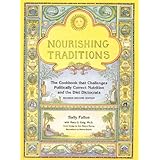
Nourishing Traditions: The Cookbook that Challenges Politically Correct Nutrition and the Diet Dictocrats Review

Nourishing Traditions:  The Cookbook that Challenges Politically Correct Nutrition and the Diet Dictocrats
Average Reviews:

(More customer reviews)
I was seeing references to this book in other books that I found helpful: The Metabolic Typing Diet and Life Without Bread. But I delayed more than a year before buying Nourishing Traditions. I figured if I knew what to eat, I didn't need a cookbook too.
I was wrong. This is a textbook as much as a cookbook. I liken it to Joy of Cooking. You can learn a lot from it about food and nutrition even if you never use its recipes. I have used recipes from both, though, and can attest to their deliciousness. But I must admit, for me the best thing about reading Nourishing Traditions is learning about nutrition, not learning new recipes.
The authors criticize the "Diet Dictocrats" who propound the "politically correct" low-fat, low-cholesterol diet. I find the epithet of "politically correct" rather grating and would hope they drop it in later editions.
The book's thesis is a Rousseauian one: industrial food production yields a product unsuited to our body's nature. To find out what is suited to our nature, we ought to rely on research of what preindustrial societies consumed. Thus, as another reviewer pointed out, they view themselves as continuators of the program initiated by the dentist Weston Price (author of Nutrition and Physical Degeneration).
I had spent years eating in accordance with the low-fat dietary dogma and my health suffered because of it. I give the authors credit for recognizing a wide spectrum of ideal diets depending on one's genetic makeup. What is more problematic is how one draws the line between natural and unnatural. Is the line to be drawn between industrial and nonindustrial societies, or is it more basic than that? The book NeanderThin, for example sees humanity making a wrong turn with the advent of civilization. Civilization brings cultivation of grain and the domestication of dairy animals. Nourishing Traditions embraces dairy and grain as long as they are prepared in ways consistent with nonindustrial societies.
Despite these controversies, Nourishing Traditions is a treasure trove of valuable information. Just one small tidbit: there is a concern that beef in the USA has an unfavorable fat profile--there is an unsatisfactory omega 6/omega 3 fatty acid ratio. I just learned from Nourishing Traditions that this problem is not present with lamb in the USA because lamb is virtually all pasture-raised. Since I live in a small apartment and have no place to hang a side of pasture-fed beef, this was very helpful information.
OK, OK, one more tidbit. Everyone by now should know that people who eat nuts live longer. I love the taste of nuts but they always were hard for me to digest. Nourishing Traditions explains why and told me how to eat nuts without the digestive upset. These people know their stuff.
I've seen five stars on a lot of books, that were, frankly, pretty lightweight. This book is a keeper. It's not someone's brilliant marketing concept turned into a book. It's clearly the product of much, much, hard work. It's not the final word. But it's a comprehensive presentation of a coherent worldview on healthy nutrition.

Click Here to see more reviews about: Nourishing Traditions: The Cookbook that Challenges Politically Correct Nutrition and the Diet Dictocrats


This well-researched, thought-provoking guide to traditional foods contains a startling message: Animal fats and cholesterol are not villains but vital factors in the diet, necessary for normal growth, proper function of the brain and nervous system, protection from disease and optimum energy levels. Sally Fallon dispels the myths of the current low-fat fad in this practical, entertaining guide to a can-do diet that is both nutritious and delicious.

Nourishing Traditions will tell you:
Why your body needs old fashioned animal fats
Why butter is a health food
How high-cholesterol diets promote good health
How saturated fats protect the heart
How rich sauces help you digest and assimilate your food
Why grains and legumes need special preparation to provide optimum benefits
About enzyme-enhanced food and beverages that can provide increased energy and vitality
Why high-fiber, lowfat diets can cause vitamin and mineral deficiencies

Topics include the health benefits of traditional fats and oils (including butter and coconut oil); dangers of vegetarianism; problems with modern soy foods; health benefits of sauces and gravies; proper preparation of whole grain products; pros and cons of milk consumption; easy-to-prepare enzyme enriched condiments and beverages; and appropriate diets for babies and children.


Buy NowGet 41% OFF

Click here for more information about Nourishing Traditions: The Cookbook that Challenges Politically Correct Nutrition and the Diet Dictocrats

Read More...

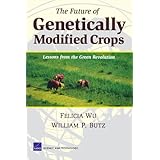
The Future of Genetically Modified Crops: Lessons from the Green Revolution Review

The Future of Genetically Modified Crops: Lessons from the Green Revolution
Average Reviews:

(More customer reviews)
The approach of this analysis was:
1) to determine the factors and historical conditions that resulted in the successes of the Green Revolution of 1960-1990 in Latin America, S Asia, E Asia and SE Asia
2) to consider parallels and differences with the 'Gene Revolution' on-going today which is proceeding in N America, China, Argentina but stalled in Europe & Africa.
The author argues that the Green Revolution was able to mobilize 'shuttle-bred' crops with nitrogen-based fertilizer & chemical pesticides to increase production of corn, rice, and wheat about threefold over these 30 years. Funding from Rockefeller Foundation, USAID, UN,funded these improvements and governments of industrializing nations also financed tractors and irrigation on a vast scale. The author contends that much of this aid must be understood in Cold War terms. Cheap, sufficient food supply was perceived by Western govts. & international aid donors as a deterrent to the rise of communism.
In contrast, the 'Gene Revolution' has been driven by private research & development, mostly multinational agribusinesses like Monsanto,Sygenta, etc. GM technology is not as conventional as shuttle breeding and GMC acceptance by farmers and consumers is far from assured. The developed world's aid donors are not of one mind on GMCs as they were during the Green Revolution.

Click Here to see more reviews about: The Future of Genetically Modified Crops: Lessons from the Green Revolution

Investigates the circumstances and processes required to establish the new Ogene Revolutiono in which genetically modified crops are tailored to address chronic agricultural problems in specific regions of the world.

Buy Now

Click here for more information about The Future of Genetically Modified Crops: Lessons from the Green Revolution

Read More...

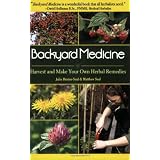
Backyard Medicine: Harvest and Make Your Own Herbal Remedies Review

Backyard Medicine: Harvest and Make Your Own Herbal Remedies
Average Reviews:

(More customer reviews)
I found this book at the library, and liked it so much that I'll be buying my own copy shortly. I have several books on medicinal herbs. This is the best one I've seen for telling you exactly how to prepare and use the herbal remedies in the book. She doesn't cover everything, but it's a very good beginning, and her directions on preparation and use will apply to other herbs that are mentioned in other books.

Click Here to see more reviews about: Backyard Medicine: Harvest and Make Your Own Herbal Remedies


"A wonderful book that all herbalists need. It embodies a heartfeltlove of herbalism combined with clearly articulated scientificinsights."-David Hoffmann B.Sc., FNIMH, Medical Herbalist
Backyard Medicine is a beautiful book, packed with nearly 300color photographs and over 120 herbal remedies that you can makeyourself. It gives a fascinating insight into the literary, historic,and world-wide application of the fifty common plants that it covers.It is the sort of book you can enjoy as an armchair reader or use toharvest and make your own herbal remedies from wild plants. Anyone whowants to improve his or her health in the same way that human-kind hasdone for centuries around the world, by using local wild plants andherbs, will find this book fascinating and useful. 416 color illustrations

Buy NowGet 27% OFF

Click here for more information about Backyard Medicine: Harvest and Make Your Own Herbal Remedies

Read More...

New Atkins for a New You: The Ultimate Diet for Shedding Weight and Feeling Great. Review

New Atkins for a New You: The Ultimate Diet for Shedding Weight and Feeling Great.
Average Reviews:

(More customer reviews)
I have hesitated to write a review because I am one of the success stories in this book. However, in light of T. Colin Campbell's unprofessional attack on this book, I believe I must speak up to share my story and the good health that has resulted in my following the Atkins plan. I am nearly 65 years old and have struggled with weight all my life. I've been on many diets including a vegetarian one with little results in either weight loss or improved health. In fact, my health markers were getting worse, and I suffered from arthritis, dry skin and elevated tryglyceride levels. My blood pressure was borderline. Since following the plan outlined in this book, I have lost weight, my arthritis has improved substantially (particularly in my neck and shoulders) and my dry skin (which 2 dermatologists had diagnosed as rosacea) has disappeared. My tryglyceride level dropped remarkably, but more importantly my HDL (the good cholesterol) has gone up and my latest BP was 117/76. I used to wear a size 18 -- now I wear a 6 or 8. All of these results came from following the plan outlined in this book.
What disturbs me further about T. Colin Campbell is that he has clearly put out a call to his vegan followers to come to the Amazon site and give bad reviews of this book, as he posted this nonsense on his webpage. I don't have a problem with their chosen lifestyle, but I do have a problem with the many deragatory posts that make it clear that they could not have read this book as they have no comprehension of its contents. Shame on them. Using the Amazon review system to grind their vegan axes should not be allowed.
Contrary to their ravings, the Atkins diet recommends lots of vegetables, a conservative amount of dietary protein and good fats. All recommendations that are supported by recent science. Read Gary Taubes "Good Calories, Bad Calories" or the distinquished works of Dr. Mary Enig. T. Colin Campbell has used this review process to further his own agenda and has encouraged his minions to post here. They disparage the book as well as mouth urban legend lies about Dr. Robert Atkins (a cardiologist, BTW). Anyway, read the book and make your own conclusions. Don't be led astray by these agenda-led and untrue attacks. This 65 year old feels 20-30 years younger!!

Click Here to see more reviews about: New Atkins for a New You: The Ultimate Diet for Shedding Weight and Feeling Great.


Buy NowGet 43% OFF

Click here for more information about New Atkins for a New You: The Ultimate Diet for Shedding Weight and Feeling Great.

Read More...

Let it Rot: The Gardener's Guide to Composting (Third Edition) (Storey's Down-to-Earth Guides) Review

Let it Rot: The Gardener's Guide to Composting (Third Edition) (Storey's Down-to-Earth Guides)
Average Reviews:

(More customer reviews)
This is a great, clear cut, interesting and fun-to-read book! Stu Campbell is able to take what, to newcomers, can be a daunting task and not only present us with the basics to feel comfortable but he also translates some of the scientific "mumbo-jumbo" of how and why compost works into layman's terms. He includes real "recipes" and approaches to try as well as suppling a list (though not nearly complete) of good materials to compost as well as what NOT to use. A short "troubleshooting" chapter called "Things You Might Worry About a Little" is a bit over the top for beginners but is part of what makes this book valuable for the seasoned composter. Let It Rot! is a not-to-technical, well-written, easy-to-read guide that takes the "yuck" out of your composting ideas! Perfect for beginners and a great refresher for near professional composters.

Click Here to see more reviews about: Let it Rot: The Gardener's Guide to Composting (Third Edition) (Storey's Down-to-Earth Guides)


Buy NowGet 20% OFF

Click here for more information about Let it Rot: The Gardener's Guide to Composting (Third Edition) (Storey's Down-to-Earth Guides)

Read More...

Timber Press Guide to Gardening in the Pacific Northwest Review

Timber Press Guide to Gardening in the Pacific Northwest
Average Reviews:

(More customer reviews)
Nicely presented book. Lots of good colour pictures and pertinent info ..sadly nothing for the veg.gardener but certainly a good reference for the PNW

Click Here to see more reviews about: Timber Press Guide to Gardening in the Pacific Northwest


Tired of being lumped into the unwieldy category of a western garden? Frustrated by the lack of reliable, practical information about gardening in the Pacific Northwest? No longer! The Timber Press Guide to Gardening in the Pacific Northwest presents all the information a gardener—whether novice or expert—needs to keep their garden beautiful and thriving. With a combined 100 years of gardening experience in the Pacific Northwest, the authors clearly explain the unique challenges and joys of gardening in the region. By dividing the Pacific Northwest into seven subregions, they help readers to better understand the climatic and geographical factors that shape their gardens. This complete guide includes extensive profiles of plants that are ideally suited to the region, including perennials, ornamental grasses, bulbs, groundcovers, roses, shrubs, trees, and climbers. The month-by-month gardening calendar describes what weather patterns to expect, what's in bloom, and what garden tasks are best done in that month. With additional chapters detailing the most common gardening problems and recommendations for effective, nontoxic ways of dealing with them, this book is nothing short of essential.


Buy NowGet 34% OFF

Click here for more information about Timber Press Guide to Gardening in the Pacific Northwest

Read More...

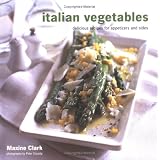
Italian Vegetables: Delicious Recipes For Appetizers And Sides Review

Italian Vegetables: Delicious Recipes For Appetizers And Sides
Average Reviews:

(More customer reviews)
This is a great cookbook for new vegetable recipes. It's always nice when there's great photos to tempt you to try a new recipe also :) I've made several dishes from this cookbook...highly recommend it!

Click Here to see more reviews about: Italian Vegetables: Delicious Recipes For Appetizers And Sides

It's no wonder that Italians have a special way with vegetables when their produce is so ripe, delicious, and flavourful. Now you can share in their secrets with this fabulous volume of easy-to-follow recipes for all the best Italian vegetable dishes. Chapters include: Shoots and Leaves; Beans, Peas, and Lentils; Root Vegetables, Onions, and Funghi; Tomatoes, Eggplant, and Bell Peppers; and Pumpkin and Squash. Dazzle friends and family with these healthy, colourful, and delicious Italian dishes - such as Asparagus with Parmesan, Stuffed Mushroom Caps, and Zucchini and Mint Fritters - that are sure to please.

Buy Now

Click here for more information about Italian Vegetables: Delicious Recipes For Appetizers And Sides

Read More...

Natural Therapies for Emphysema and COPD: Relief and Healing for Chronic Pulmonary Disorders Review

Natural Therapies for Emphysema and COPD: Relief and Healing for Chronic Pulmonary Disorders
Average Reviews:

(More customer reviews)
This book covers it all. If you're looking for alternative methods for treating COPD or any lung disease, then I would recommend this book.It's very well organized and informative and covers just about everything involving COPD, it's causes, and the various treatments available. There's no fluff here.

Click Here to see more reviews about: Natural Therapies for Emphysema and COPD: Relief and Healing for Chronic Pulmonary Disorders


Buy NowGet 32% OFF

Click here for more information about Natural Therapies for Emphysema and COPD: Relief and Healing for Chronic Pulmonary Disorders

Read More...

The Organic Home Garden: How to Grow Fruits and Vegetables Naturally Review

The Organic Home Garden: How to Grow Fruits and Vegetables Naturally
Average Reviews:

(More customer reviews)
Newcomers to organic gardening will find Patrick Lima's Organic Home Garden an excellent, basic introduction which covers fresh and healthy foods and how to grow them with a minimum of additives. From selecting hardy varieties of seeds and seedlings to choosing appropriate compost and controlling pests and diseases through non-chemical means, Organic Home Garden is packed with charts, drawings, and even recipes.

Click Here to see more reviews about: The Organic Home Garden: How to Grow Fruits and Vegetables Naturally


Buy Now

Click here for more information about The Organic Home Garden: How to Grow Fruits and Vegetables Naturally

Read More...

Why We Get Fat: And What to Do About It Review

Why We Get Fat: And What to Do About It
Average Reviews:

(More customer reviews)
The brilliant thing about science is that when something is disproved once, it's disproved forever. The not-so-brilliant thing about public health policy is that it has little to do with science.
Everyone in the developed world knows what's causing our obesity epidemic. BBC nailed it: "We eat too much, and too much of the wrong things," and Michelle Obama tells us "We have to move more." Clearly what we need is a balanced diet of lean meats, some good fats, and complex carbohydrates like fruit, vegetables and whole grain bread, and exercise of 30 to 90 minutes per day. Their prescription is completely reasonable and makes intuitive sense.
It is neat, plausible, and wrong. It has in fact been disproved, as nearly as "disproof" can exist in nutrition science.
In his previous book, Good Calories Bad Calories, respected science journalist Gary Taubes exhaustively researched and cited two centuries worth of research in nutrition. He came to the conclusion that none of those recommendations is supported by science, because the fundamental theory on which they're based is wrong. Why We Get Fat is an updated summary of that earlier work, much quicker and easier to read, with some significant points clarified.
The most important point of the book is that all those public recommendations -- the food pyramid, the "eat food, not too much" approach, everything we know about a balanced lifestyle -- is founded on the premise of Calories In vs. Calories Out. That we get fat because we eat too many calories, or we don't burn enough of them through movement. But this is nonsense. It's not just wrong, it is actually not a statement about what causes obesity at all (or heart disease, cancer or diabetes, for that matter.) It is, in Taubes' words, a "junior high level mistake," because it tells us nothing about fat accumulation. If we get fat, by definition we have taken in more calories than we've put out -- but WHY we took in those calories, or didn't burn them, is the key point.
Taubes reviews the scientific literature (rather than the popular press) and presents a conclusion that was common knowledge before WWII, and heresy afterward: we get fat because our fat cells have become disregulated and are taking nutrients that should be available to other tissues. Like a tumor, the cells live for themselves rather than in balance with the rest of the body. And since those nutrients aren't available, we become hungry and tired. Therefore we eat more, and move less.
For the chronic dieters among us, one passage about animal models will explain decades of frustration. Rodents with a particular part of the hypothalamus destroyed would become obese and/or sedentary *as a consequence* of their bodies putting on more fat. "After the surgery, their fat tissue sucks up calories to make more fat; this leaves insufficient fuel for the rest of the body...The only way to prevent these animals from getting obese is to starve them...they get fat not by overeating but by eating at all." Sound familiar?
The problem isn't one of gluttony and sloth, as Taubes refers to it, but of hormone balance. Simply put, some people are more sensitive to the hormone effects of insulin, cortisol, and a few other -ols, than other people are. The more sensitive you are, the more you're likely to get fat, and the more fat you're likely to get, in the presence of even small amounts of carbohydrate -- and in the absence of enough fat.
That's right, this book advocates eating fat. Not just moderately, but as much fat as possible, up to 78% of calories. Not lean meats, not Jenny-O 99.6% fat-free turkey, not skinless chicken breasts, but lard. Yes, lard. The healthy way of eating, according to Taubes, is moderately high protein and high fat. Yes, high fat. About a 3:1 ratio of fat to protein, and almost no carbohydrates. (Telling people to eat a balanced diet containing carbohydrates is, he says, equivalent to telling smokers to include a balanced serving of cigarettes.) And he demonstrates exactly why a high-fat, low-carbohydrate diet is the most heart-healthy approach, as borne out by several dozen recent studies.
While Taubes acknowledges that exercise seems to be good for us for a variety of reasons, weight control isn't one of them. Study after study conducted by proponents of exercise have admitted that they see no compelling evidence for exercise as a weight-loss tool. And it makes sense if you throw out the calories in/calories out model of why we get fat. If we're fat because our fat tissues are starving the rest of our cells of fuel, exercise is just going to make us hungrier and more tired, not leaner and more fit. (It's worth noting that according to Taubes, in the 1930s obese patients were treated with bed rest.)
[This review was edited to clarify the following point.] The main thrust of Taubes' argument, however, surrounds sugar and to a lesser extent any carbohydrate. Insulin is the primary hormone that fixes fat in the fat cells. This is why Type I diabetics lose weight: they're not producing enough insulin. Since insulin is manufactured in direct response to carbohydrates, if you don't eat them, you won't have a mechanism by which to store fat. (Taubes notes that this mechanism is not controversial; it simply hasn't had an impact on nutrition policy.) Taubes argues that any success in standard diets can be attributed directly to the dieter's reduced intake of carbohydrates, especially sugars and particularly fructose.
Once the underlying cause of obesity is understood (hormone balance, not gluttony/sloth) the recommendations on what to do about it are surprisingly simple and therefore brief. This is a book about the science of nutrition, not a diet book, but there is a list of recommended foods in the Appendix. The book does not tell you how to eat in a restaurant. But it does tell you that the issue isn't in your brain, your willpower, your character, your job, your environment or even (except to the extent that you're sensitive to carbohydrate) in your genes. The problem with fat is in your fat cells.
For a lay audience, this book is as good as it gets if you want to read actual science about health and nutrition. If you're of scientific or technical bent, read Good Calories Bad Calories first, then give Why We Get Fat to your parents.

Click Here to see more reviews about: Why We Get Fat: And What to Do About It


Buy NowGet 38% OFF

Click here for more information about Why We Get Fat: And What to Do About It

Read More...

Green Imperialism: Colonial Expansion, Tropical Island Edens and the Origins of Environmentalism, 1600-1860 (Studies in Environment and History) Review

Green Imperialism: Colonial Expansion, Tropical Island Edens and the Origins of Environmentalism, 1600-1860 (Studies in Environment and History)
Average Reviews:

(More customer reviews)
WITH ITS RE-WRITING OF THE ORIGINS OF ENVIRONMENTALISM, THIS BOOK IS PROBABLY THE MOST SIGNIFICANT BOOK PUBLISHED IN ENVIRONMENTAL HISTORY IN THE LAST 10 YEARS. I FELT IT COMPARED WELL WITH SIMON SCHAMA'S LANDSCAPE AND MEMORY IN HELPING US TO UNDERSTAND THE EVOLUTION OF ENVIRONMENTAL CONCERN. IN PARTICULAR THE NOTION THAT ENVIRONMENTALISM BEGAN ON FRENCH OCEANIC ISLAND COLONIES, ESPECIALLY ON MAURITIUS, IS A REVOLUTIONARY ONE.

Click Here to see more reviews about: Green Imperialism: Colonial Expansion, Tropical Island Edens and the Origins of Environmentalism, 1600-1860 (Studies in Environment and History)


Buy NowGet 20% OFF

Click here for more information about Green Imperialism: Colonial Expansion, Tropical Island Edens and the Origins of Environmentalism, 1600-1860 (Studies in Environment and History)

Read More...

The Diet Rebels Cookbook: Eating Clean and Green Review

The Diet Rebels Cookbook: Eating Clean and Green
Average Reviews:

(More customer reviews)
I debated between giving this cookbook three stars or four stars. I really wanted to love the entire book, but found the recipes, taste-wise, mostly average. The real aggravation for me, though, was the index. Let's say you are in the mood for healthy soup, so you turn to the index and look up "soup". What do you find in this index? Not a thing under "soup". Though the book does have soup recipes in it, you have to know the name the authors' give to a soup recipe to look it up in the index. When reading the beginning of the book it talked about their yummy lemonade recipe. Mmm, that sounded good so I looked up "lemonade". Nope, nothing there. The reader needs to know that it is titled "Lavender Lemonade". Want to find recipes for salad dressings? Don't look up "salad dressings" because, once again, you will find nothing there. This type of lazy editing and indexing is a real annoyance!
I did find the information on sprouting, soaking, and using nuts and grains useful and I appreciated the emphasis on clean eating. As I said at the beginning, I really wanted to love this book because the authors and I seem to have similar views on diet, but it in the end I found the information and recipes to be okay, but not great. I don't regret purchasing "The Diet Rebel's Cookbook", but it's not as good as it could have been.


Click Here to see more reviews about: The Diet Rebels Cookbook: Eating Clean and Green

The Diet Rebel s Cookbook reveals the benefits of eating whole, natural foods as a regular part of your diet and includes traditional recipes and time-tested preparation tips that will help your body get the most out of what you eat. Learn how to use whole grains, natural sweeteners, fresh produce, and healthy meats on a daily basis, and you will impress your friends and family with recipes that are both delicious and healthy.

Buy NowGet 27% OFF

Click here for more information about The Diet Rebels Cookbook: Eating Clean and Green

Read More...